How Are Industrial Steel Buildings Manufactured? From Workshop to Site
An industrial steel building goes through several stages before it is ready to be erected on site. At Kit Buildings Direct, steelwork is manufactured at our workshop in Hilton, Derby, following detailed fabrication drawings and structural calculations prepared for each building. The process starts once you have ordered your building and the required structural calculations have been completed by a structural engineer. We commonly work with warehousing, manufacturing, storage, distribution, workshops, commercial premises, cold storage and transport facilities.
Here’s what happens during the manufacturing process and what happens once the steelwork reaches your site.
How Do You Manufacture Industrial Steel Buildings?
With an industrial building, structural calculations must first be completed by a structural engineer before manufacturing can begin.
Once the structural calculations and required drawings are in place, the steel components can be manufactured at the Kit Buildings Direct workshop in Hilton, Derby.
Stage 1: Cutting and Drilling
- Steel members are cut to length and drilled to match the fabrication drawings.
- Columns, rafters, purlins and side rails are prepared.
Stage 2: Welding and Fixing
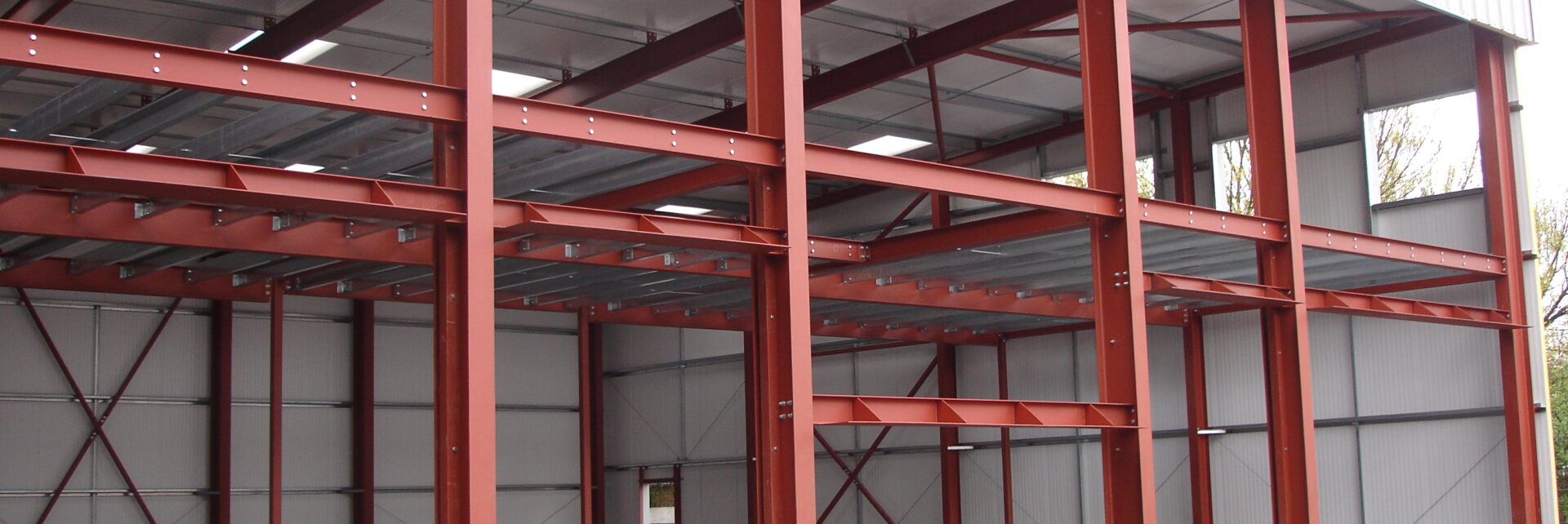
- Frame components are welded and fixed together into sections, ready for assembly on site.
- Each piece is marked for its position in the finished building, so our installation team knows exactly where it goes.
Stage 3: Painting the Steelwork
- Once manufactured, the steelwork is painted using the appropriate paint system.
Stage 4: Quality Checks
- We check our steel frames against UKCA-marked standards, in line with BS EN 1090, the British standard covering the execution of steel structures.
- Welds, dimensions and coatings are all checked before anything is signed off for dispatch.
Stage 5: Delivery to Site
- Once manufacturing is complete, the steelwork is prepared for delivery to the customer’s site, ready for the installation process to begin.
Why Does Prefabrication Make Installation Faster?
A steel frame that arrives prefabricated needs far less work on site than one built from raw materials. Cutting, drilling and welding all happen in the workshop, so the site visit is mostly assembly.
- Columns, rafters and rails bolt together on site rather than being cut or welded there, so less of the job depends on the weather.
- Very little on-site cutting or welding means less noise and mess for anyone working near the site during the build.
You can read more about how quickly a prefabricated steel frame goes up in our guide to the quick installation of industrial steel buildings.
What Happens Once the Building Reaches the Site?
Once the steel components arrive on site, installation follows five stages, from the foundations through to the finishing details.
- Foundations are excavated and the concrete is left to cure before any steel goes up.
- The steel frame is erected, braced and lined into position.
- Roof sheets are fitted to make the building watertight.
- Cladding, doors, flashings and gutters are installed, and the site is cleared.
The full stage-by-stage process, including timescales, is covered in our guide to industrial steel building installation.
Why Choose Kit Buildings Direct to Manufacture Your Industrial Building?
Kit Buildings Direct has extensive experience in the steel building industry.
- 50+ years of experience manufacturing and installing steel industrial buildings.
- UKCA-marked steel, fabricated in-house for consistent quality control at every stage.
- Winners of the Diamond Distinction Award for Industrial Prefab Buildings Manufacturer 2026.
You can see finished examples of our work in our completed projects gallery or contact us today for your free quote.
Can you supply an industrial building without installation?
Supply-only kit buildings are available if you prefer to arrange the installation yourself.
The supply-only option can still include the relevant foundation plan, and additional features such as mezzanine floors can also be supplied where required.
